
Commissioner Ajilong calls on youth to avoid criminal involvement, to stay in school
Daphine Nakabiri2026-08-26T18:16:47+00:00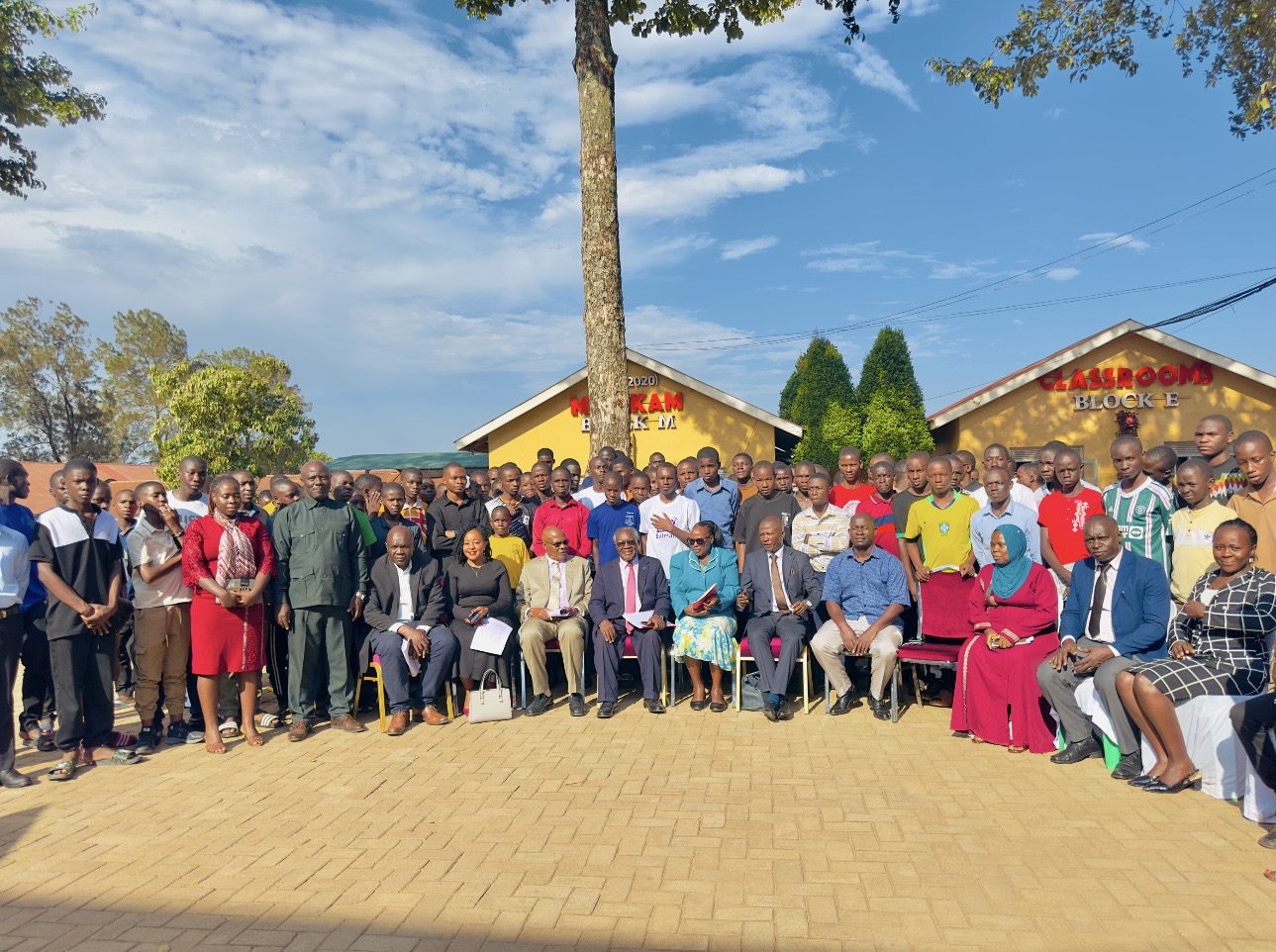
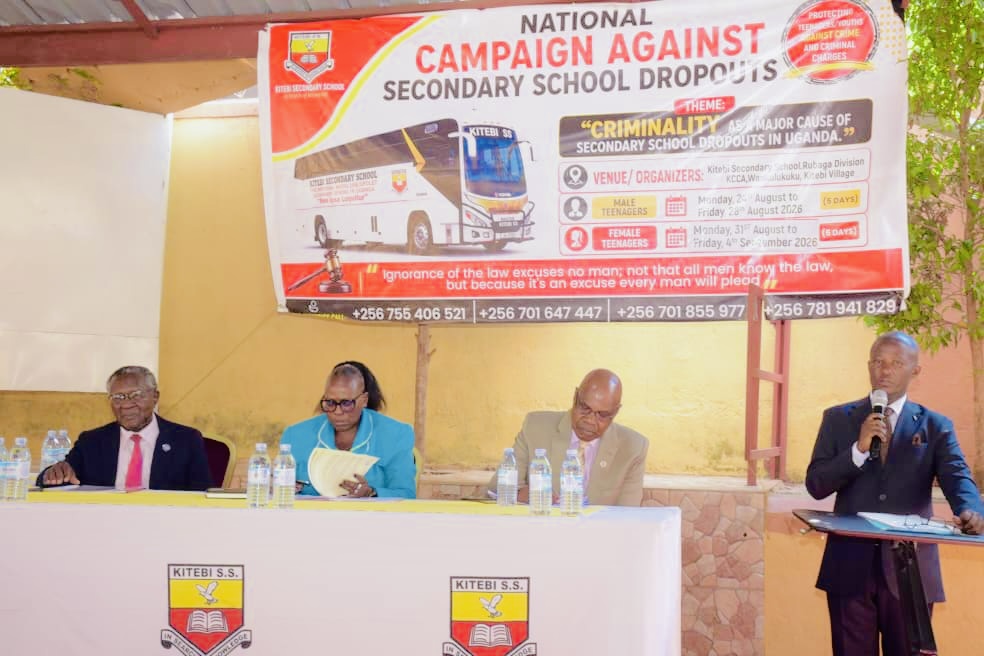
Kampala, Uganda. During the opening ceremony of a two-week residential campaign against secondary school dropout held at Kitebi Secondary School, boys aged 13 to 24 were urged to recognise their self-worth, avoid criminal activities and remain committed to their education.
Under the theme, “Criminality as the Major Cause of Secondary School Dropout,” the campaign aims to equip learners with knowledge and guidance on criminal behaviour, the consequences, and its impact on education and future opportunities. As a result, the organisers envision that this will help young people understand the risks associated with criminality while encouraging them to make responsible choices, develop positive habits and remain in school.

Addressing criminality in schools
Today, many secondary school learners are becoming involved in or being influenced by others to engage in criminal activities and serious forms of indiscipline, behaviour that usually results in suspension or expulsion from school.
Even then, every year, thousands of learners enrol in schools across Uganda with hopes of completing their education and progressing to the next level. Yet, a significant proportion do not make it through the full education cycle. Recent data highlights the scale of the challenge. In 2024, only 27.9 percent of Uganda’s 16-year-old population completed the lower secondary cycle and registered for the Uganda Certificate of Education (UCE), meaning more than two-thirds did not reach this milestone.

Speaking during the event, Mr Badru Lubega Wagwa, an educationist and Vice Chairperson of the Board of Governors, observed that schools regularly take disciplinary action against learners involved in offences and misconduct, including drug abuse, theft, examination malpractice, bullying, fighting and sexual abuse.
He noted that when some of these learners fail to return to school after suspension or expulsion, they lose opportunities to complete their education, pursue further studies or acquire skills needed for future careers.
He further warned that leaving school in most cases exposes teenagers to negative peer influence, substance abuse, exploitation and other forms of criminality, potentially creating a cycle that becomes difficult to break.
“Once out of school, they may become more vulnerable to negative peer influence, substance abuse, exploitation and other forms of criminality, creating a cycle that becomes difficult to break,” he said.
Wagwa also cautioned that young people who leave school with limited academic qualifications face difficulties securing employment, creating challenges not only for themselves and their families, but also for the wider economy.
Building a path to change
With the consequences of criminality and indiscipline on learners’ education in mind, Hajj Muhammed Kamulegeya, Team Leader of Kitebi Secondary School, noted that there is need for greater emphasis on early intervention, guidance and empowerment to help young people make positive choices and remain in school.
Addressing the youth during the campaign, Hajj Kamulegeya emphasised that addressing school dropout requires more than responding to learners after they have already become involved in criminal activities. He explained that young people need to be equipped with the knowledge, confidence and skills to make responsible decisions and pursue productive opportunities.
He thus encouraged the youth to turn their ideas into action, noting that many people hesitate to start because of the fear of failure, yet taking the first step gives them an opportunity to learn, grow and challenge perceptions about what they can achieve.

According to him, empowering young people to develop themselves can not only improve their individual prospects, but also contribute to the country’s social and economic transformation.
He noted, “Early intervention is crucial in helping young people recognise the consequences of their choices, overcome challenges and remain focused on their education, thereby reducing school dropout and preventing wastage of national resources.”
As such, having provided the youth with an opportunity to learn and engage with different speakers, he urged them to pay attention to the advice shared and use the lessons to inspire positive choices and meaningful change in their lives.
Empowering youth to shun criminality
During her address, Mary Harriet Ajilong, Commissioner at the Ministry of Education in charge of Guidance and Counselling, urged young people to recognise their self-worth and avoid involvement in criminal activities.
She explained that criminality can take different forms, including theft, drug abuse, violence and other offences, which can have serious consequences for learners. For instance, Ms Ajilong noted that the desire to have what others possess or pressure from peers can sometimes influence young people to engage in activities that may put their education and future at risk.
She therefore emphasised the importance of contentment and appreciating what they have, while encouraging learners to remain focused on their education and personal development.
“Value yourself and avoid getting involved in criminal acts. While your parents are willing to pay your school fees, do not take this opportunity for granted. Instead, focus on what matters and work towards achieving your educational goals,” she said.
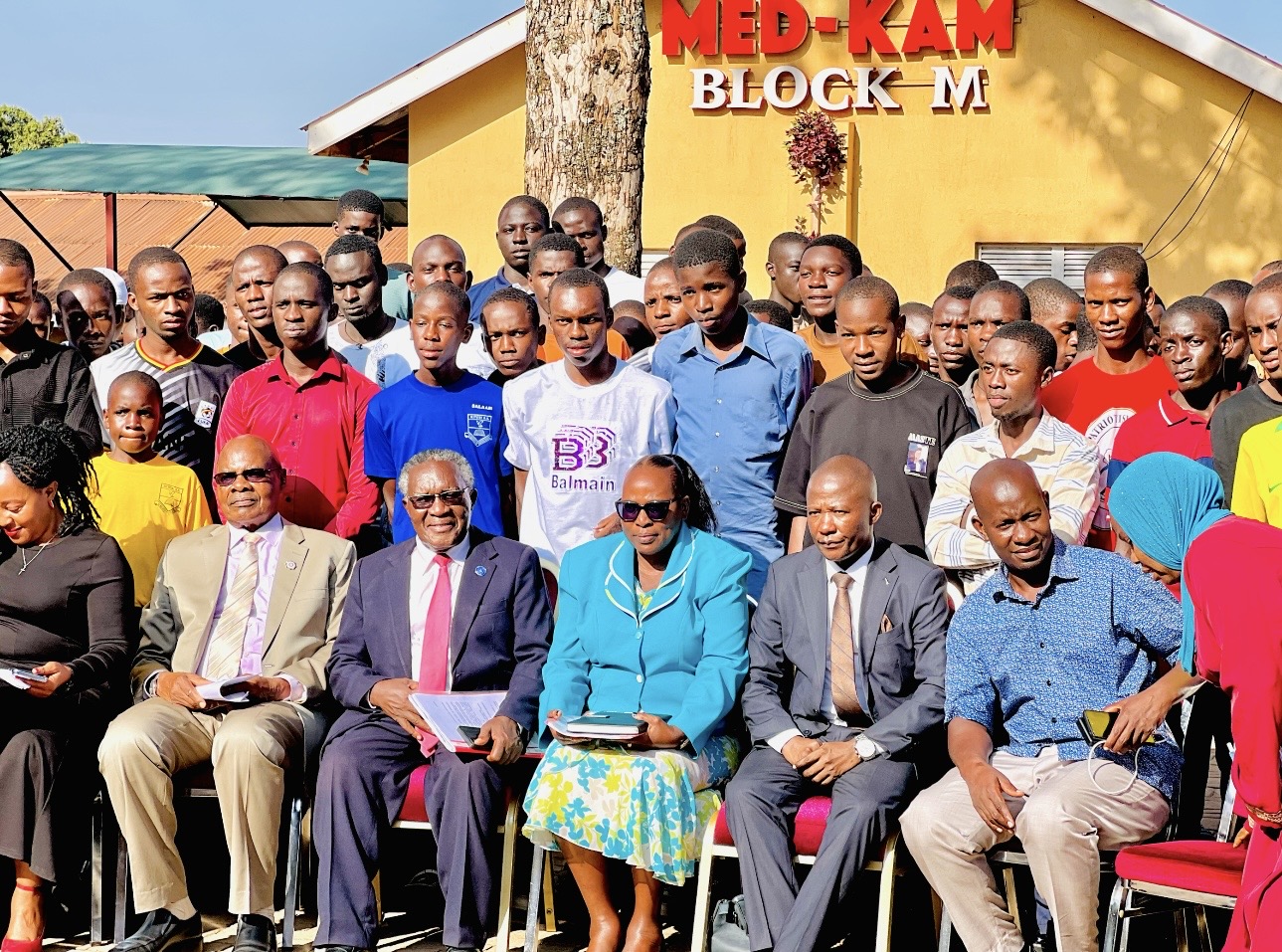
Ms Ajilong also cautioned learners against allowing peer pressure to influence their decisions. She encouraged those facing challenges to seek guidance from their parents, teachers and other trusted adults rather than trying to deal with their struggles alone.
She particularly encouraged the boys to open up about the challenges they face, noting that seeking help should not be viewed as a sign of weakness, but creating an environment where young people can freely talk about their concerns should be done to enable parents, teachers and other people responsible for their wellbeing to offer timely support.
She urged the teenagers to build strong relationships with trusted adults and make use of guidance and counselling services whenever they encounter difficulties.
“Be free with your parents and speak to them about what bothers you. this will help you get out of frustartion that leads to suicide or issues of criminality that can lead to school dropout.” She highlighted.

Ms Ajilong also encouraged the youth to identify positive role models who can inspire them, provide guidance and give them something constructive to aspire to as they pursue their education and future goals.
In her closing remarks, she encouraged the youth to stay away from criminal activities, warning that involvement in crime can jeopardise their education, opportunities and future aspirations.
“We are here for a purpose, do not get involved in crime that will lead you to dropout of school.” She cautioned.
Ms Ajilong officially declared the campaign open, marking the beginning of the two-week programme, which forms part of a broader vision by the school management to establish a nationwide programme aimed at addressing school dropout linked to criminality.
Hajj Kamulegeya explained that expanding the programme to different parts of the country will help reduce the costs and logistical challenges associated with bringing learners to a central location, while enabling more young people to access the guidance, knowledge and support needed to remain in school.
Building strong family relationships
According to Pastor Christion Alideki, the Chairperson of the Kitebi Secondary School Board, he observed that in an era where many parents are often occupied with work and other responsibilities, this leaves them with limited time to spend with their children. He explained that this can sometimes create a gap in communication, making it difficult for young people to share the challenges and concerns they are experiencing.
He thus encouraged the learners to take the initiative in strengthening their relationships with their parents and grandparents, rather than waiting for adults to always initiate conversations.

Pastor Alideki urged the youth to regularly check on their parents and grandparents and create an environment where they can openly discuss issues affecting them.
He said, “Having trusted family members to turn to can help young people seek guidance before challenges escalate into behaviours that could affect their education and future.”
He particularly encouraged the youth to seek guidance from their grandparents, who, he noted, can provide valuable knowledge about their family history, values, culture and roots. He explained that understanding their background can help young people develop a stronger sense of identity and belonging, which can in turn give them direction as they make decisions about their lives and future.
He encouraged the youth to view their parents and grandparents not only as providers, but also as sources of wisdom, guidance and support, particularly when faced with difficult choices.
Expectations of the teenagers
For the learners, the campaign provides an opportunity to reflect on the choices they make and how those choices can shape their future. Abdulrahuman Bisegera, one of the participants and a student at King’s College Budo, said the campaign is an opportunity for young people to learn, gain new perspectives and be inspired.
He said that, beyond learning about criminality and its consequences, he also hopes to gain financial knowledge and skills that could help him become more self-reliant in the future.
For Juma Mukoza, Prime Minister of Kitebi Secondary School, the campaign is also an opportunity for him to learn and gain new perspectives that he can share with fellow learners. He acknowledged that, as a student leader, he is not perfect and still has much to learn. Mukoza says he hopes to gain deeper insights from the various sessions and use the knowledge and experiences acquired to inspire and positively influence the student body when school resumes.
Looking forward
While the girls’ session is scheduled to begin on Tuesday, September 1, 2026, the organisers look forward to welcoming more young people to the campaign and creating opportunities for them to gain knowledge, guidance and support.
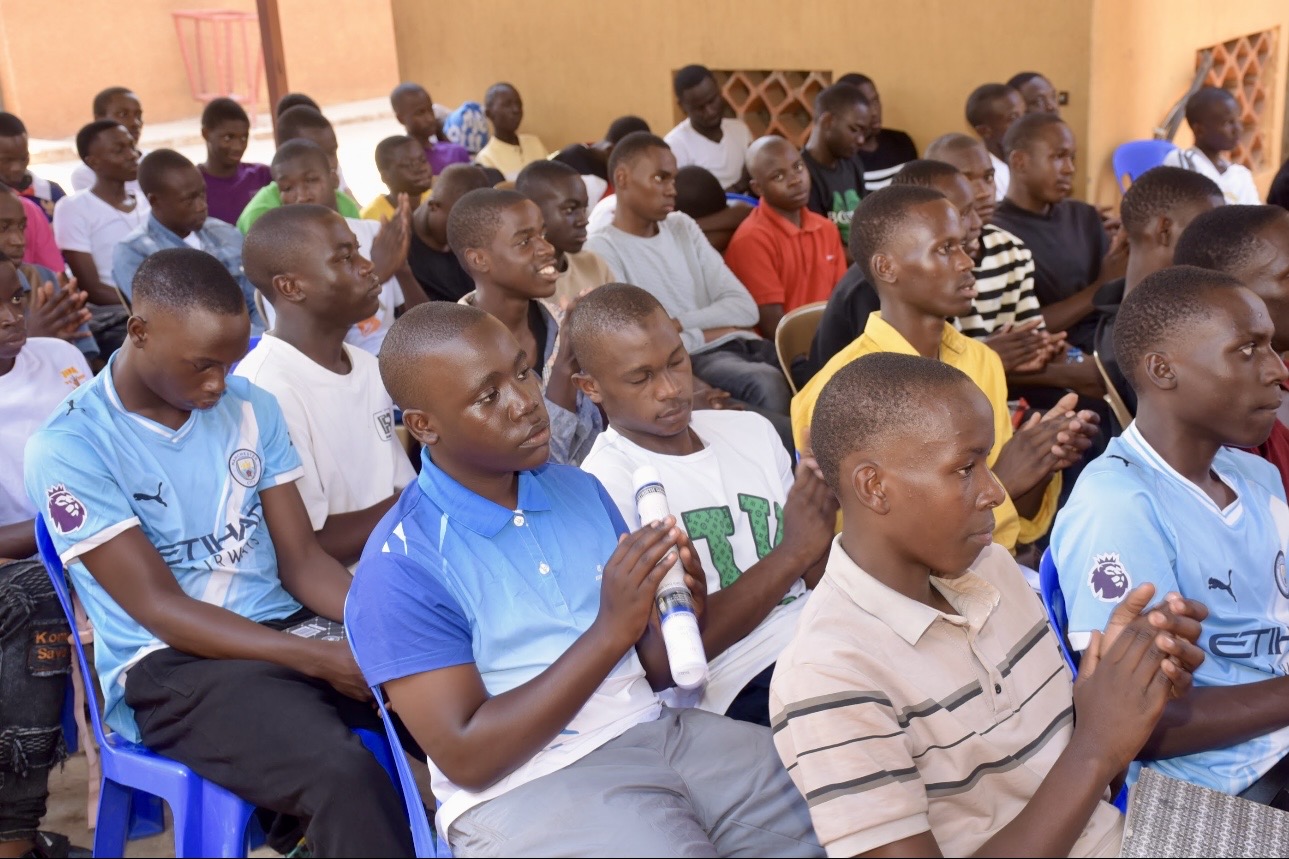
The boys’ session brought together about 130 participants learning, sharing experiences and interacting with experts from the education, health, security, finance and legal sectors.
As the campaign continues, the organisers hope to have many more young people come on board, expanding its reach and impact while equipping learners with the knowledge and skills to make responsible choices, avoid criminality and remain focused on their education.






Leave a Reply