
Kitebi Secondary School launches national campaign to combat school dropout linked to criminality
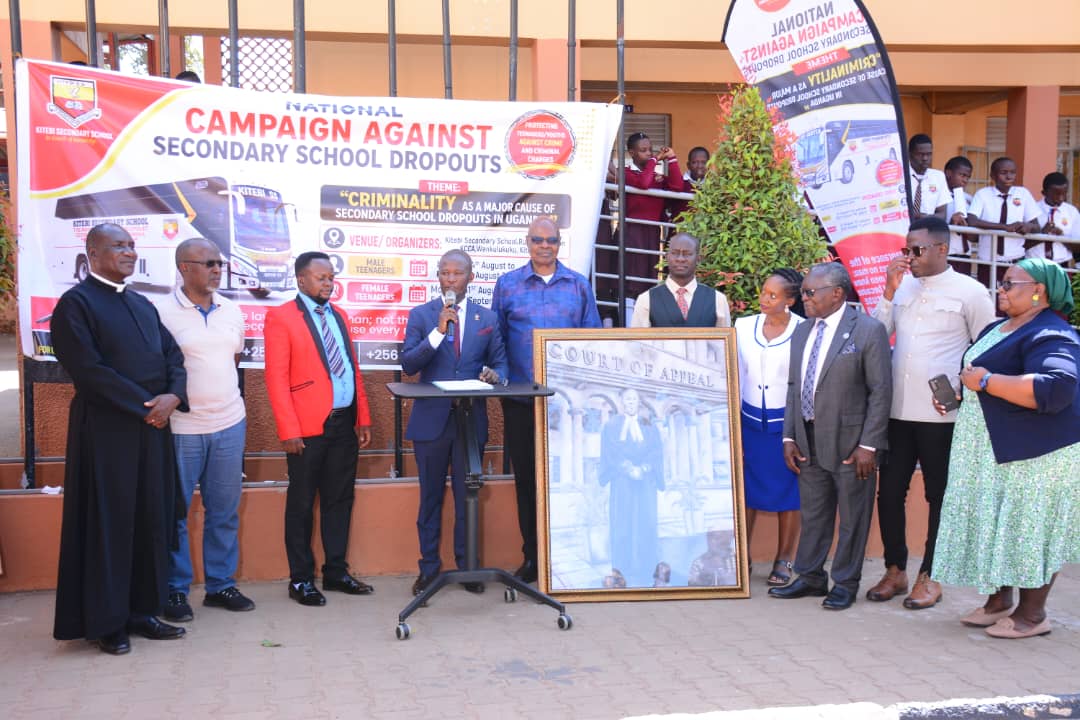
Kampala, Uganda. Kitebi Secondary School has launched a national campaign aimed at addressing criminality among young people and its potential impact on school retention, academic progress and the future of learners.
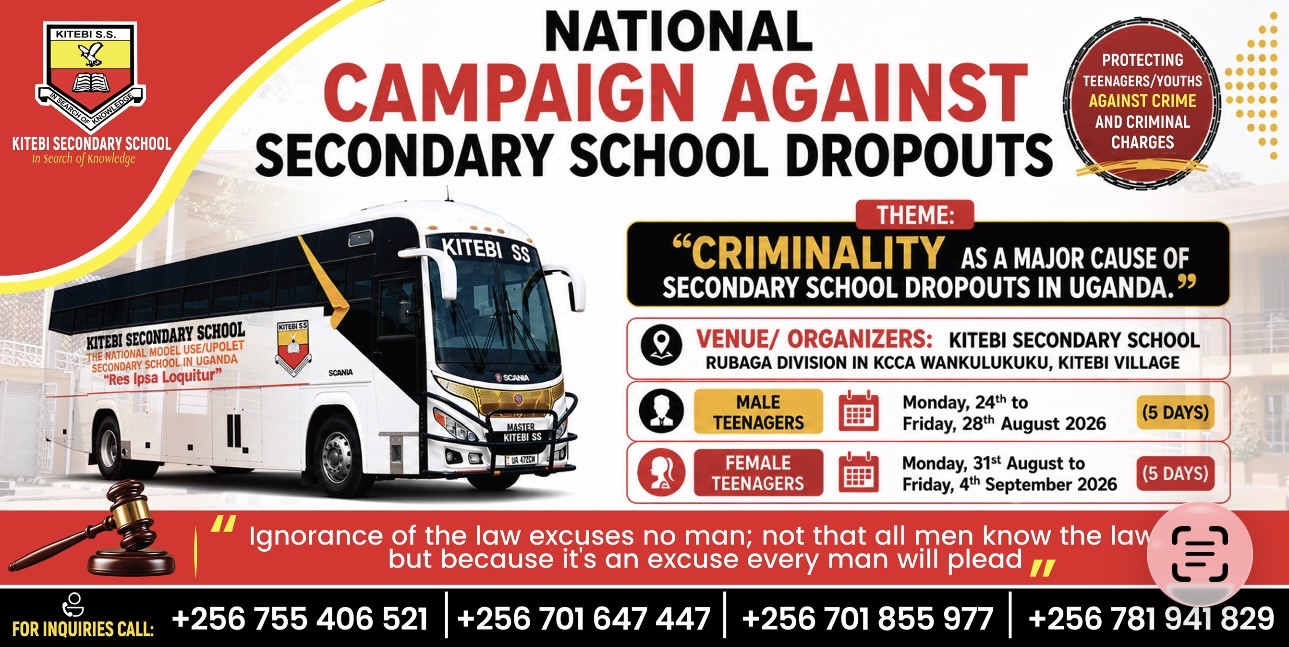
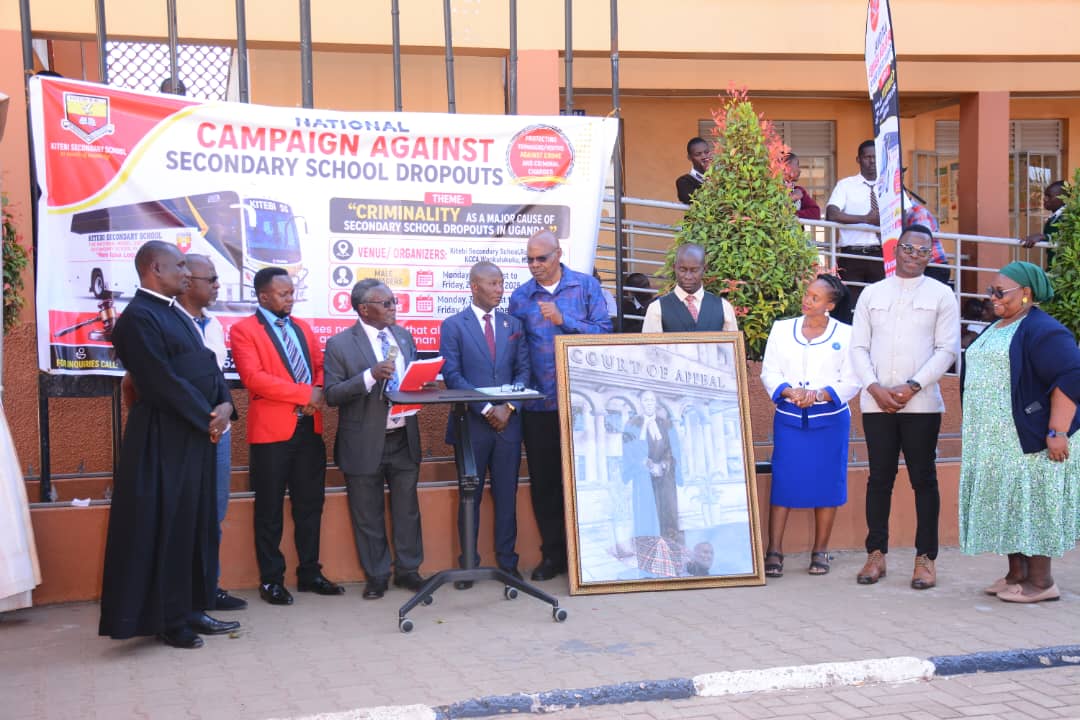
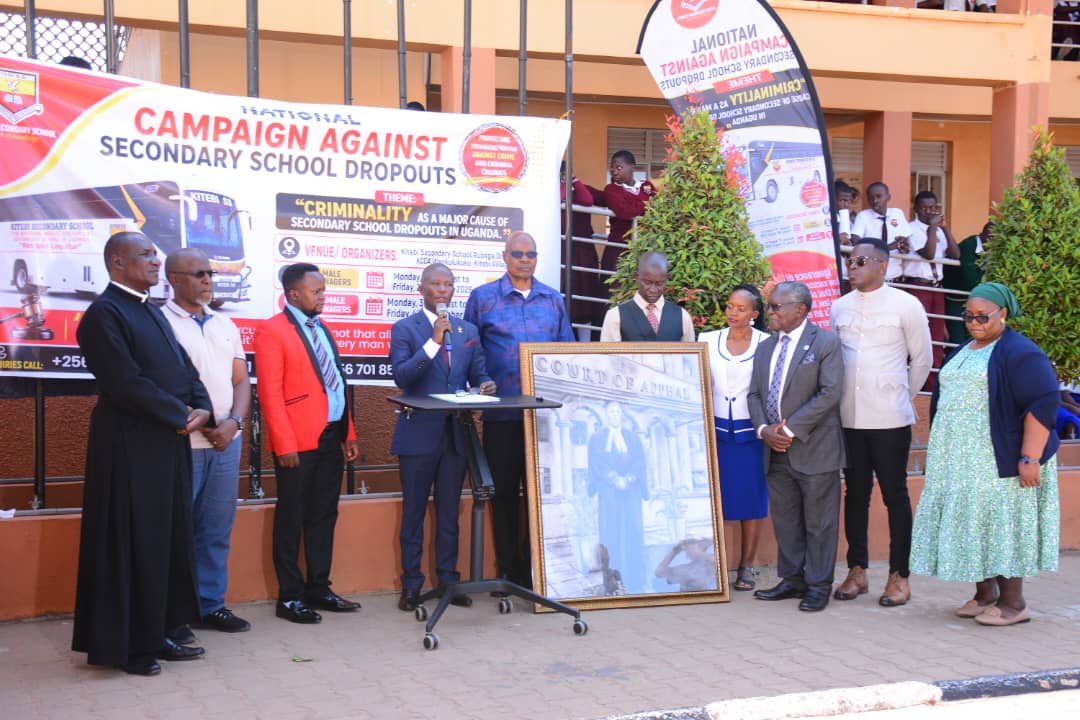
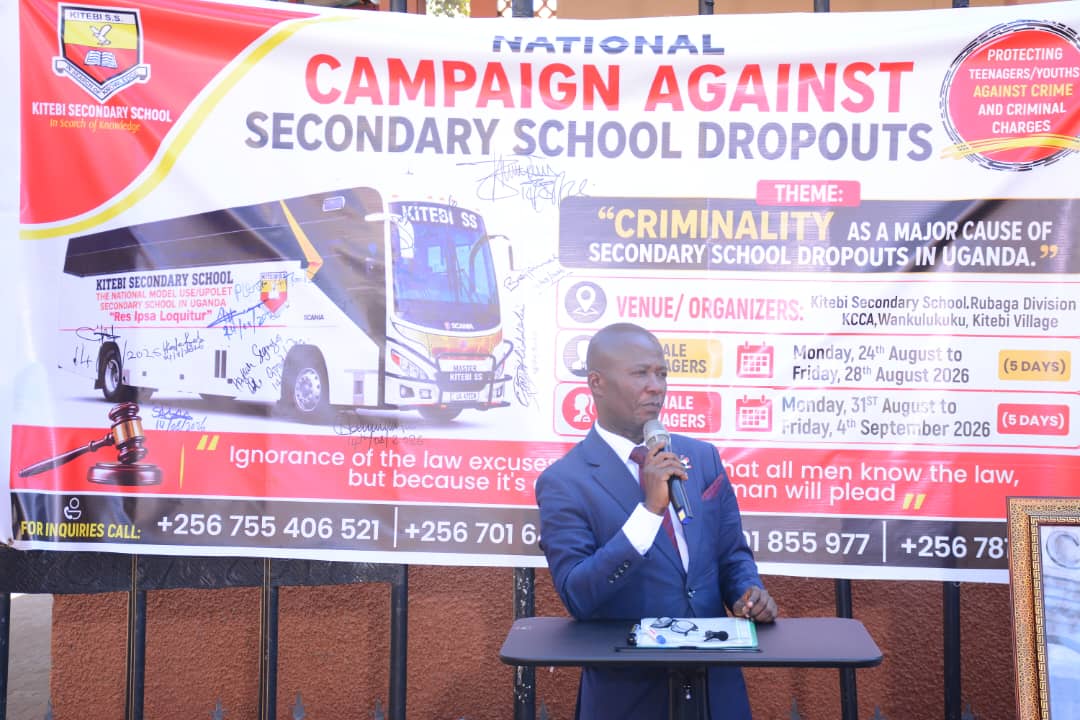
The National Secondary School Students’ Dropout Reduction Campaign, launched by Hajj Muhammed Kamulegeya, an advocate and Team Leader of Kitebi Secondary School together with the school Board of Governors is being conducted under the theme “Criminality as a Major Cause of Secondary School Dropouts in Uganda.”
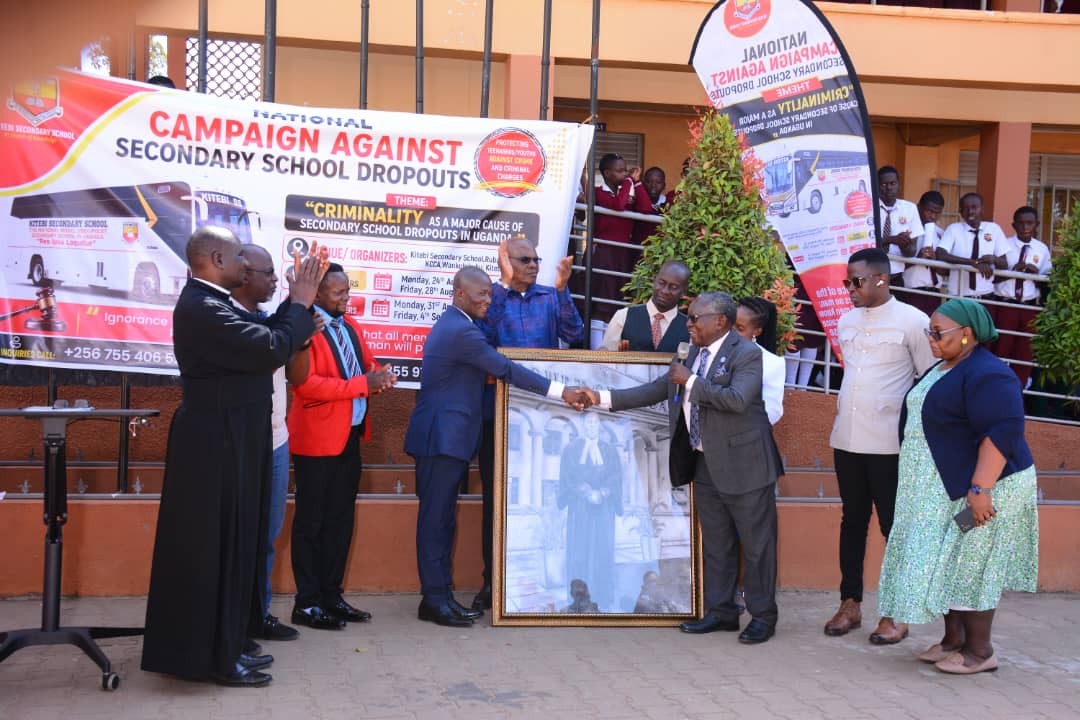
The launch was marked by the Board of Governors signing the campaign poster, signalling their collective commitment to preventing criminal behaviour among young people and supporting learners to remain in school.
Why the campaign matters
The campaign comes at a time when schools and communities continue to grapple with challenges including peer pressure, drug abuse, violence, theft and other forms of criminality that expose young people to conflict with the law and disrupt their education.
According to the Youth and Juvenile Offending in Uganda 2025 report, based on Uganda Police Force Annual Crime Reports and Justice, Law and Order Sector (JLOS) data for 2017–2024, young people were involved in a range of offences that can have serious implications for their education. The report recorded 2,736 cases of theft and burglary, offences that can result in disciplinary action, suspension or expulsion, particularly in schools with strict zero-tolerance policies on theft. It also recorded 172 cases of narcotics and drug abuse, which can contribute to declining academic performance, absenteeism, truancy and eventual disengagement from school.
A further 971 sex-related offences were recorded. Such cases can have far-reaching consequences for young people, including criminal justice proceedings, stigma, teenage pregnancy and, in some circumstances, interruption of schooling. The report also recorded 319 cases of assault and gang violence, which can expose learners to disciplinary action, retaliation and unsafe school environments, potentially forcing affected students to change schools or withdraw from education.
These cases illustrate how different forms of criminality can intersect with young people’s education, either through direct disciplinary and legal consequences or by creating environments that make it difficult for learners to remain safely and consistently in school.
Similarly, according to the Journal of Adolescent Health 2015 (and archived by the National Institutes of Health – PMC), it highlights that juveniles who are arrested during their high school years are up to 4 percent less likely to graduate. In Africa as a continent, through an authoritative documentary source of the MDPI Journal of Social Sciences on Challenges of School Disengagement: Section 3 (Discussion, page 8) and Section 4, are to the effect that 34.6% of the teenagers or youth are not either in education, employment, or training. The report further states that approximately 89 million teenagers/ youths aged (12 – 24) are currently out of school, as this is a result of regional crimes which directly cause this high dropout rate among secondary school students.
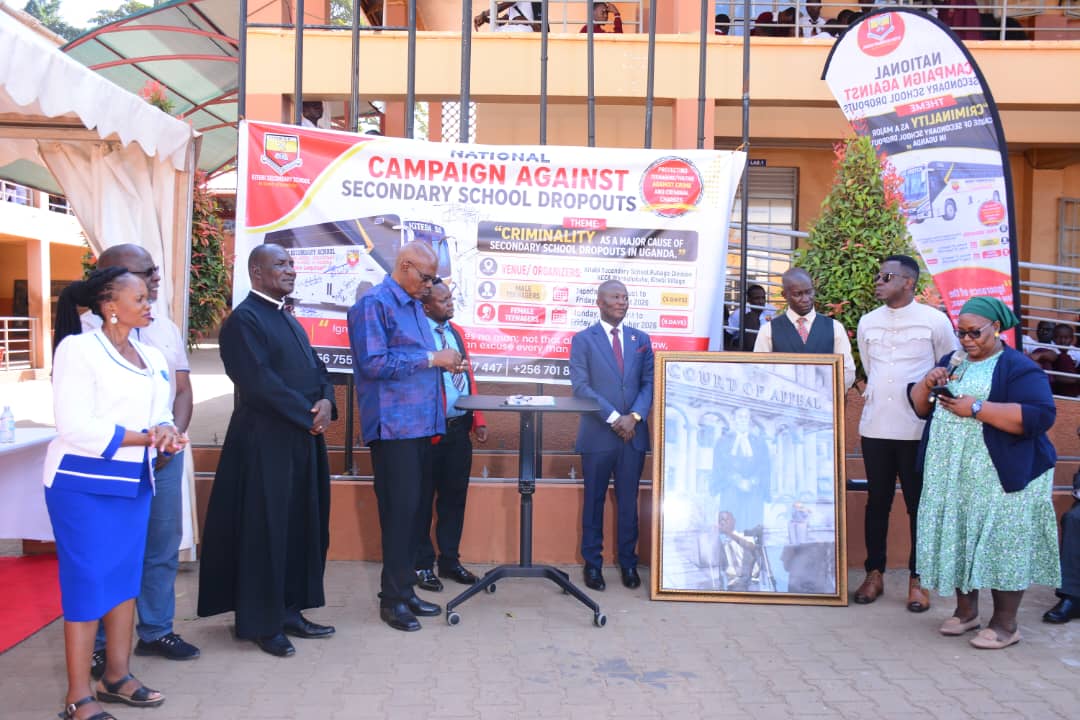
Speaking during the launch of the campaign at Kitebi SS, Hajj Muhammed Kamulegeya, the Team Leader of the school explained that there is need for early intervention, through guiding young people and sharing knowledge to help them understand the consequences of their choices.
He emphasised, “Teenagers need guidance because they are still developing the judgement and decision-making skills that will influence their adult lives.”
Objectives
Under the legal mandates such as;
- The Constitution of the Republic of Uganda 1995 as amended specifically under Objective XXIX, which is to the effect that it shall be the duty of every citizen to be patriotic and loyal to Uganda and to promote its well-being.
- Article 17 (c), which is to the effect that “it is a duty of a citizen to protect children and vulnerable persons against any form of abuse, harassment, and ill-treatment”.
- Children Act Cap 62, Laws of Uganda 2023, section 3 (1) & (2), in their totality, uphold the importance of welfare and the guiding principle for children as a paramount consideration before the state, the court, the tribunal, the local authority or any person determining any question in respect to the upbringing of a child.
- Corinthians 9:7, Acts 20:35 and Quran 2:277 put emphasis on the promotion of charity.
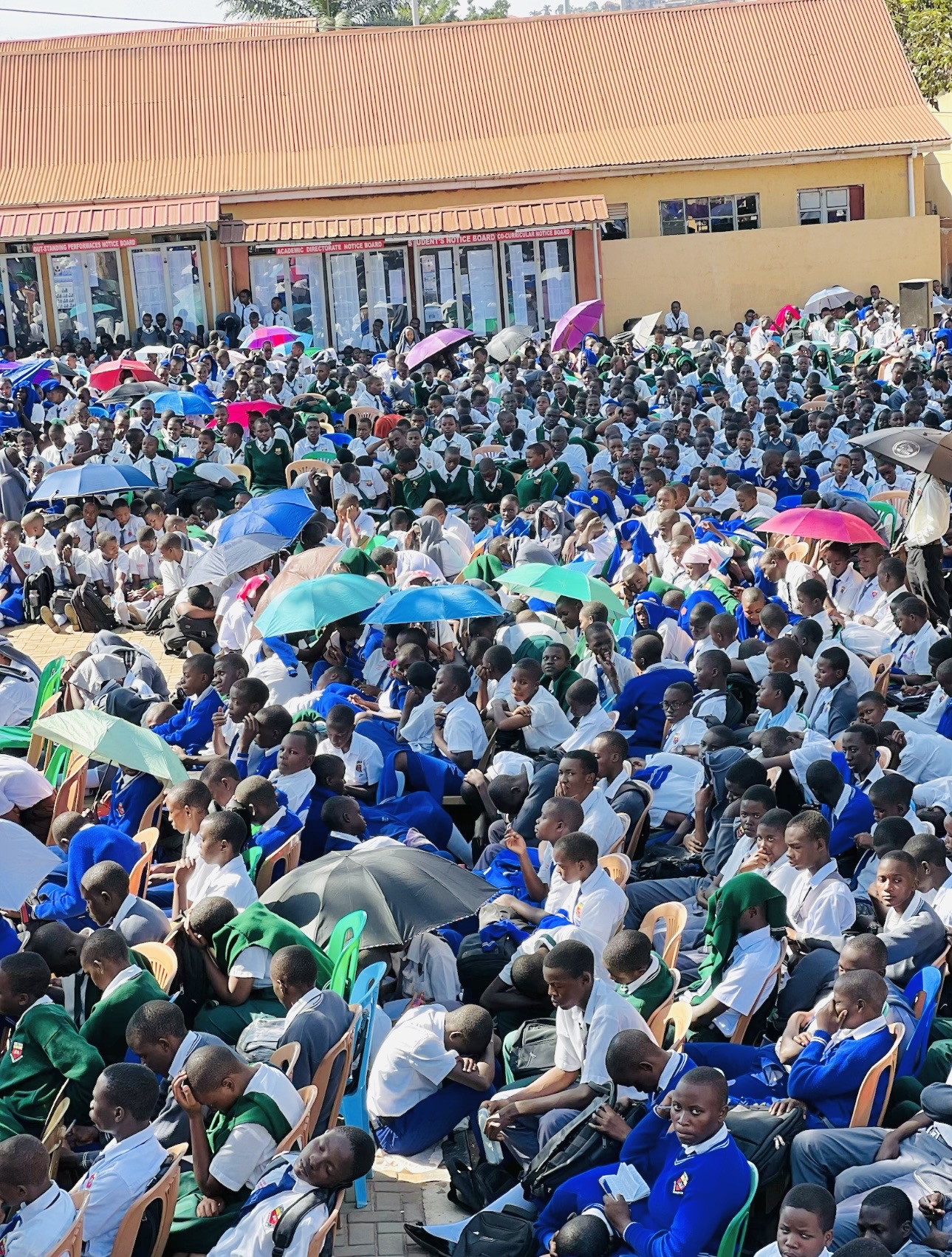
The institution aims at controlling and reducing the high crime rates and anti-social behaviour in the communities, teenage pregnancy and early marriages, mental illness and stigma, national resource wastage, severe income disparities, and the low-income wage trap, through;
- Educating the teenagers/youth about the dangers of School-Based Drug Networks.
- Educating the teenagers/youth about crime and criminal charges.
- Educating the teenagers/youth on what crimes are and how crimes are classified.
- Educating the teenagers/youth about the rights of a person charged with a crime.
- Educating the teenagers/youth about their constitutional rights and equal protection under the law.
- Educating the teenagers/youth about when their constitutional rights can be limited or suspended.
- Educating the teenagers/youth about their obligations as citizens.
- Educating the teenagers/youth about common defences in criminal charges.
- Educating the teenagers/youth on how criminal cases and civil suits are tried.
- Educating the teenagers/youth about the implications of a judgment against a convict and how a judgment can be enforced against a convict.
- Inspiring the teenagers/youth in professions like law and education.
The campaign therefore seeks to move the conversation beyond punishment to prevention, awareness and empowerment.
Building resilience against crime
The two-week campaign is designed to equip teenagers and young people with knowledge and skills that can help them recognise negative influences, understand the law and make informed decisions.
Participants will be introduced to different forms of crime, how offences are classified and the implications of criminal charges. They will also learn about the rights of a person accused of a crime, constitutional rights and responsibilities, citizens’ obligations and circumstances under which certain rights may be limited.
The programme will further provide an introduction to how criminal and civil cases are handled, common defences in criminal cases and the implications of a judgment against a convicted person.
Through this approach, the school hopes to help young people understand that involvement in criminal behaviour can have consequences not only for their immediate circumstances, but also for their education, relationships, future employment opportunities and participation in society.
Important quotes
- Ignorance of the law excuses no man; not that all men know the law, but because it is an excuse every man will plead —John Selden (1584–1654).
- The guilty sometimes go free rather than those citizens be subject to easy arrest —Justice William O. Douglas (1898–1980).
Empowering young people to stay in school
The campaign also recognises that criminality is not the only factor contributing to school dropout. Young people can face a range of challenges, including poverty, teenage pregnancy, early marriage, mental health challenges, stigma, peer pressure and other social and economic pressures.
By addressing these issues through awareness and guidance, the campaign seeks to strengthen young people’s ability to remain connected to education.
It will also encourage participants to consider positive career pathways, particularly in professions such as law and education, while promoting patriotism, responsible citizenship and a sense of responsibility towards their communities.
A two-week residential programme
The campaign is targetingyouths aged 13 to 24 and will take place during the second-term holiday from August 24 to September 4, 2026.
The programme is set to be conducted in two five-day residential sessions. The first session, running from August 24 to 28, bringing together male participants, while the second session, from August 31 to September 4, will focus on female participants.
According to the school management, participation will be based on the expressed interest of parents and guardians, with registration conducted on a first-come, first-served basis.
For registration or further inquiries, interested participants and their parents or guardians can contact Kitebi Secondary School through:
Email: kitebissht@gmail.com
Telephone: +256 772 617 979 / +256 702 564 022
Bringing stakeholders together
Kitebi Secondary School recognises that keeping young people in school requires a coordinated effort involving families, schools, government institutions, law-enforcement agencies, justice-sector actors and communities.
The school plans to work with a range of stakeholders, including the Ministry of Education and Sports, Uganda Police Force, Justice, Law and Order Sector, Judiciary, Directorate of Public Prosecutions, Uganda Law Society, Uganda Human Rights Commission, National Council for Children, local governments, Kampala Capital City Authority and secondary schools, among others.
Their involvement is intended to give participants an opportunity to interact with professionals who can provide practical information about the law, child protection, responsible citizenship and the consequences of criminal behaviour.
Partnership and support
The school is calling upon parents, guardians, well-wishers and other partners to support the campaign and take an active role in helping young people remain in school. The initiative reflects Kitebi Secondary School’s commitment to supporting learners beyond academic achievement by also promoting their social, legal, personal and civic development.
By equipping young people with knowledge, guidance and opportunities to make informed choices, the school hopes to strengthen their resilience against criminal influence, encourage responsible citizenship and help them remain focused on their education and future.
Individuals and organisations wishing to support the campaign can make contributions through:
Bank Account No.: 0200608003
Account Name: Kitebi Senior Secondary School
Bank: Bank of Africa
Branch: Equatorial Branch
As the campaign seeks support from the wider community, the school management also emphasises the importance of taking action to create a positive difference in the lives of young people.
Among the life lessons shared by the school leadership are:
“Small actions taken are better than big plans in our heads.”
“The world is changed by our example, but not by our opinions.”
“When we are leaving this earth, we take nothing we received except whatever we gave out as charity.”
These messages underline the campaign’s broader call for collective action—encouraging everyone to contribute in whatever way they can towards keeping young people in school, protecting them from criminal influence and helping them build a better future.




Leave a Reply